
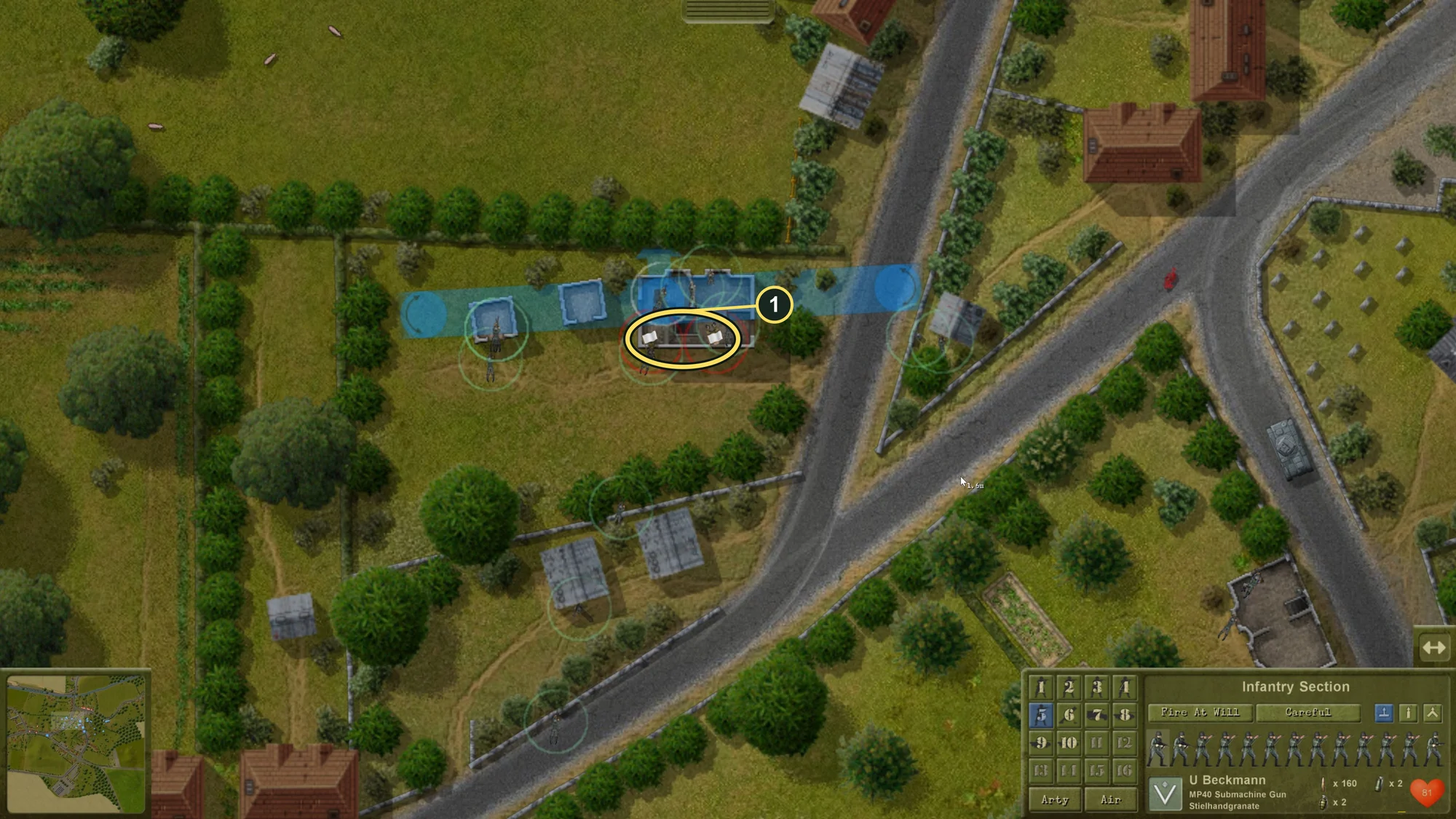
The first two men to surrender had the right idea. They stood outside a village house with white flags, having apparently concluded that the afternoon offered limited opportunities for advancement. My tanks were still feeling optimistic. That would prove considerably more expensive.
After months away from wargaming, Firefight had seemed a gentle way back. There was some doubt about whether the old command skills were still there, although the ability to overestimate them appeared to have survived the lay-off intact. Gates of Dunkirk offered a village, a bridge and an objective on the far side. A manageable evening’s work, provided nobody made it unnecessarily complicated.
Fortunately for the British, somebody was available.
A plan with excellent prospects
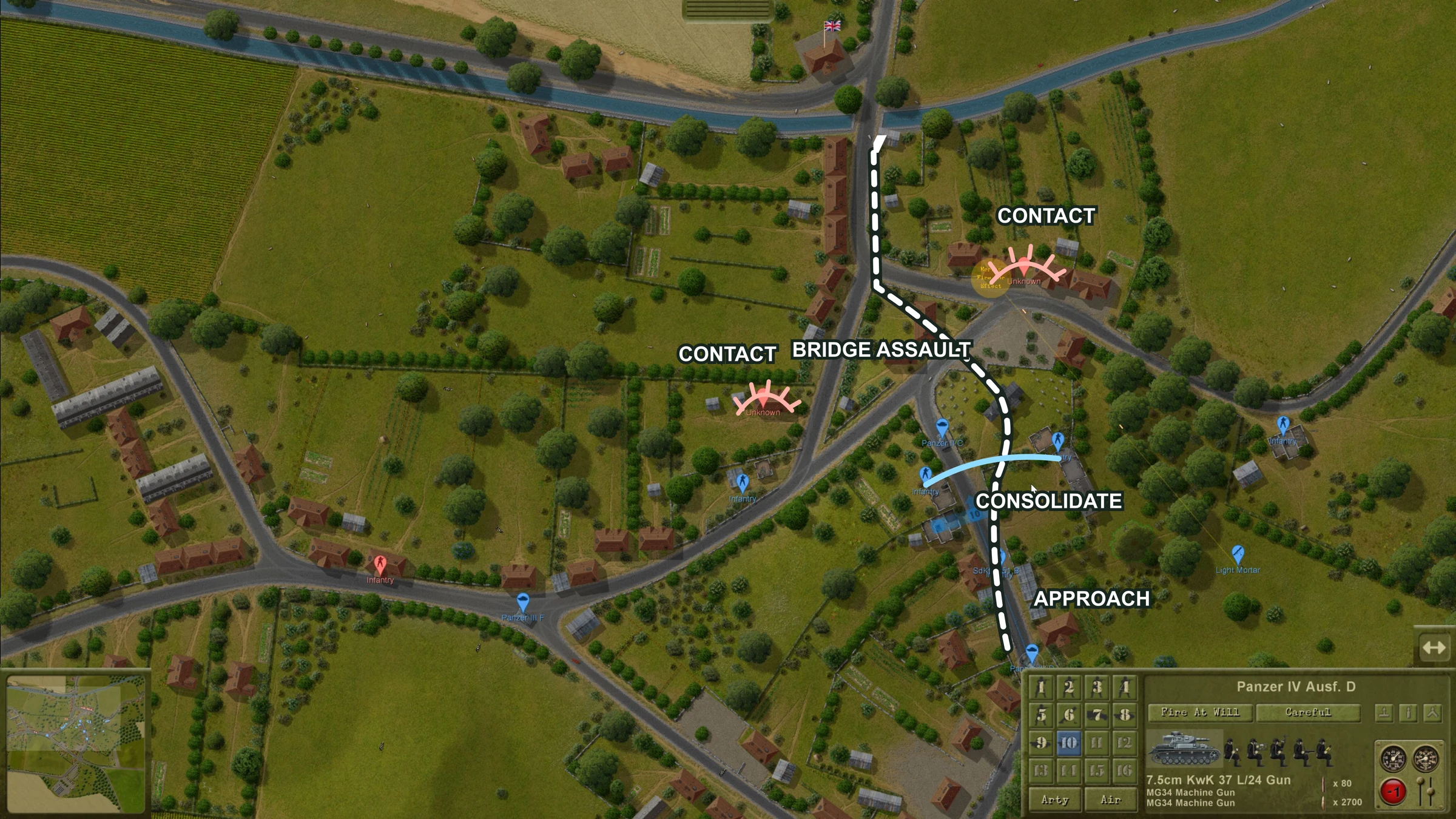
The infantry would work through the gardens and houses, regroup around the churchyard, then approach the bridge with tanks in support. A section would stay in reserve. It was reassuringly sensible, the sort of plan that makes a commander look competent while everyone is still standing where they were put.
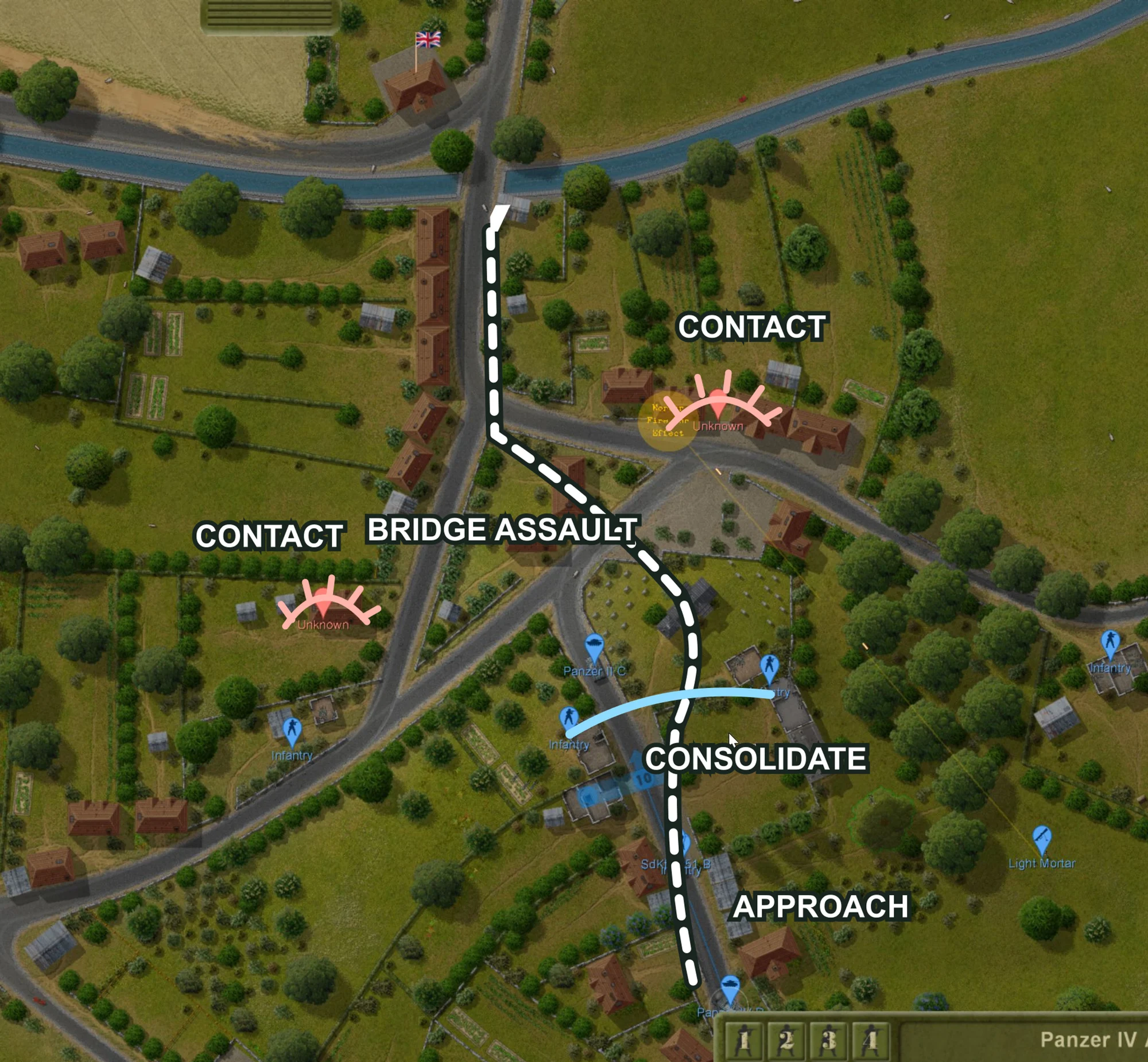
The first advance did little to discourage this impression. Infantry moved up through the southern junction, armour followed, and mortar fire went onto a British position farther north. Then two men at the western house put up white flags.
More white flags appeared among the northern houses. That was enough. Apparently the months away had done no lasting damage; perhaps the British were even more out of practice. I started to get cocky. With the village opening up, the bridge began to look like the final errand before a satisfactory victory screen.
The cost of a little confidence
At the crossing, the advance narrowed into a traffic jam under fire. Men crowded the buildings by the road. A vehicle burned near the bridge; another smoked in a garden to the west. Squad 4’s casualty messages arrived in a rush, making the earlier optimism increasingly difficult to account for.
The second lost tank took most of my confidence with it. Attention shifted to finding a third replacement, an uncomfortable moment when the job was supposed to be taking a bridge. The available armour was running out rather faster than the reasons for needing it.
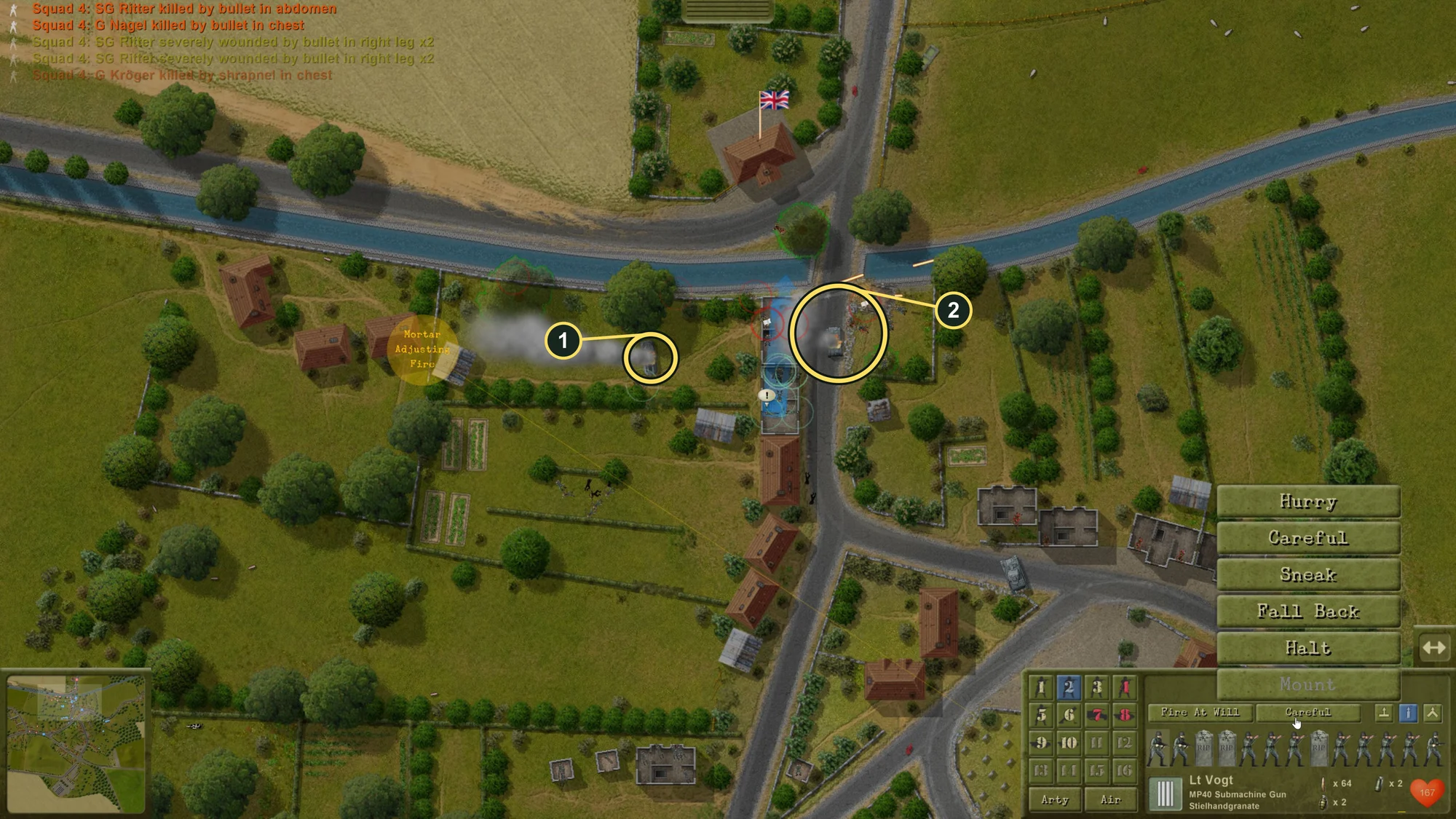
A British 2-pounder eventually appeared on the road north of the objective. Below it, the Panzer IV was burning. The exact responsibility for every wreck remained unclear, but the gun now had my undivided attention. Orders went to the mortars to pound the damn thing. Revenge had entered the planning process, where it was receiving a warmer welcome than caution.
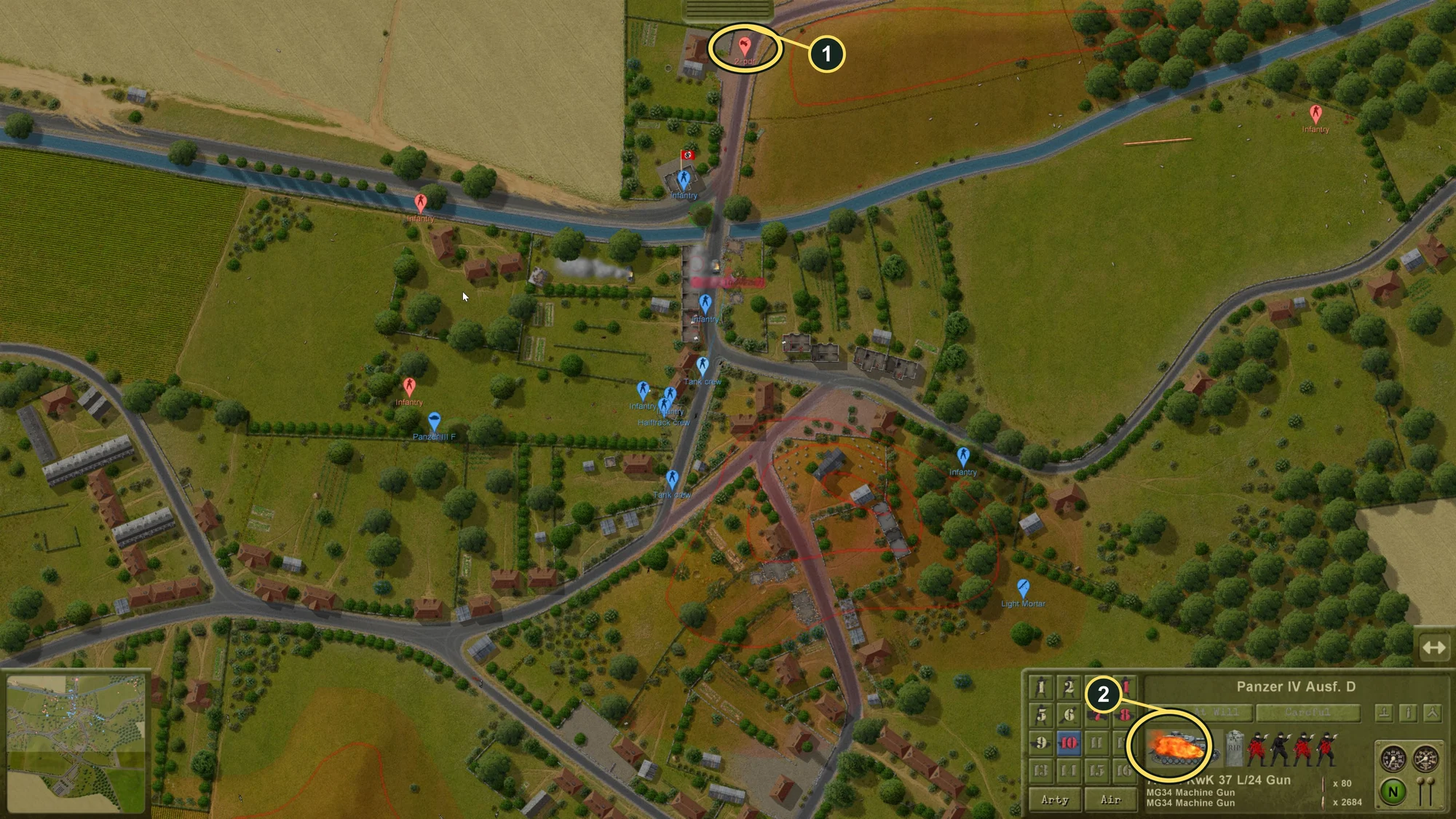
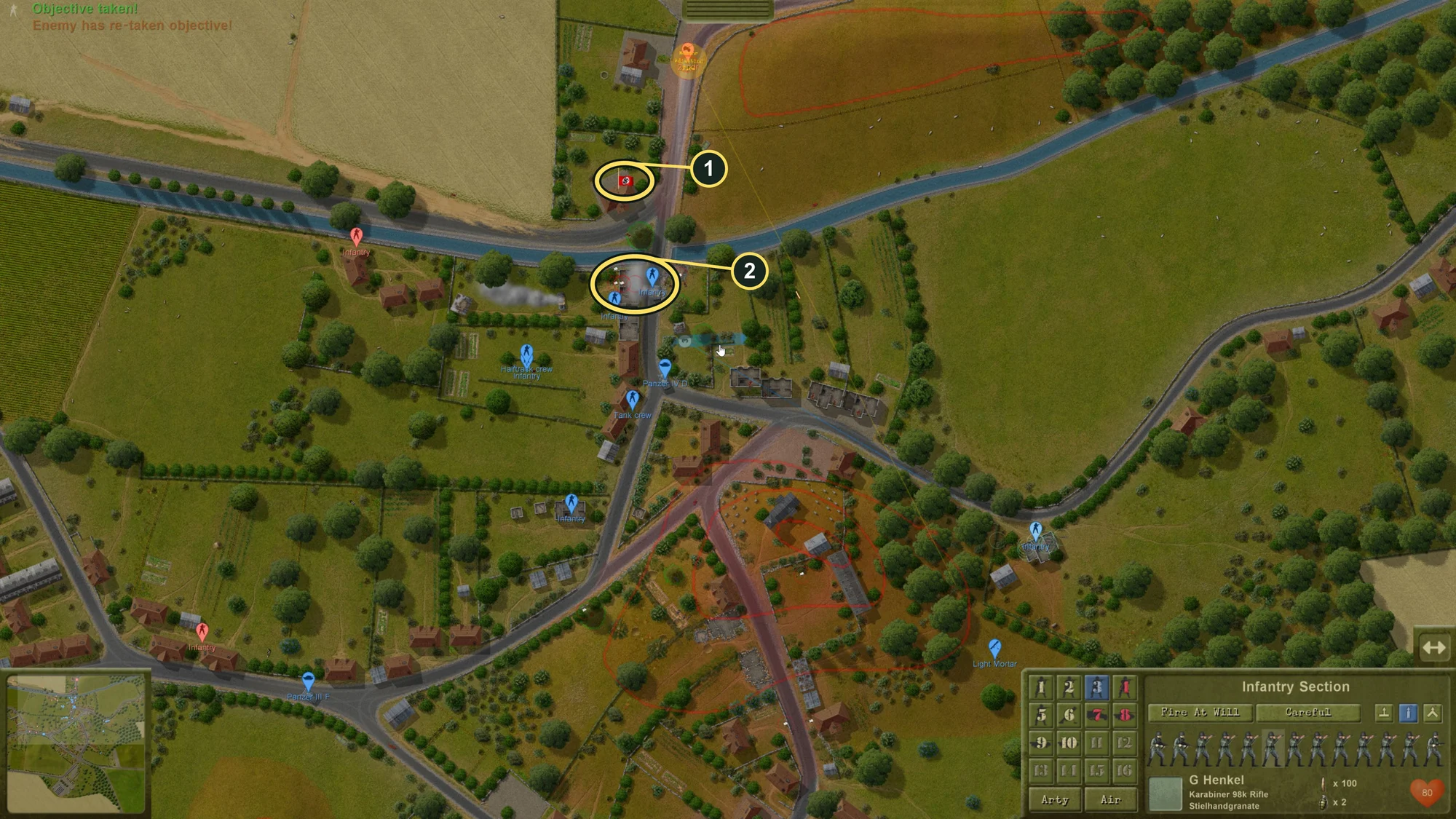
The infantry kept going. The objective changed hands during the fighting, but eventually men reached the far side and the flag changed in our favour again. The bridge was ours, at a price that had not featured in the original estimate.
One of the tanks might at least enjoy a second career as a local landmark. “Turn left at the commander’s second mistake” would be a perfectly serviceable set of directions to the junction.
Headquarters had reservations
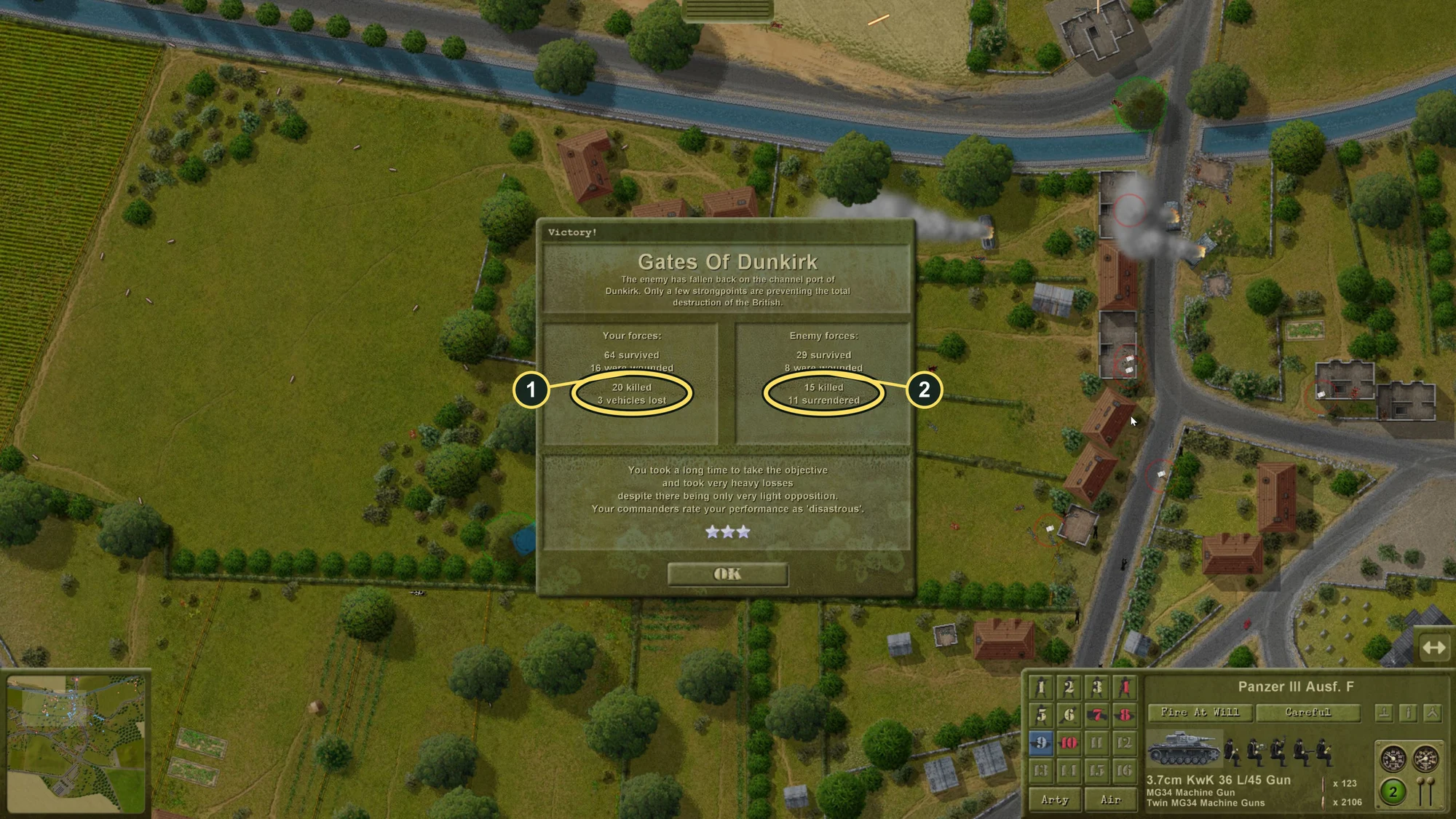
Firefight announced victory, then rated the performance “disastrous”. Too much time, too many losses, very light opposition. After months without commanding the pixeltruppen, this struck me as a rather chilly welcome back. Surely winning warranted a little encouragement.
The casualty list weakened that argument. Twenty men killed, sixteen wounded and three vehicles lost. Eleven British soldiers had surrendered, but the result was still much less tidy than it had felt from the safety of the mouse. There had seemed to be more men coming home. Now there were letters to write.
A second attempt would need a pause at the churchyard, the far-bank gun dealt with, and fewer vehicles queuing to discover what the infantry had not yet found. Most of that was already in the first plan. The missing precaution was allowing for the man giving the orders.
Firefight had made a fine return to wargaming. My generalship was taking a little longer. Those first two men had recognised a bad afternoon while there was still time to get out of it. There was probably something to learn from them.
More costly victories: my France ’40 after-action report.