
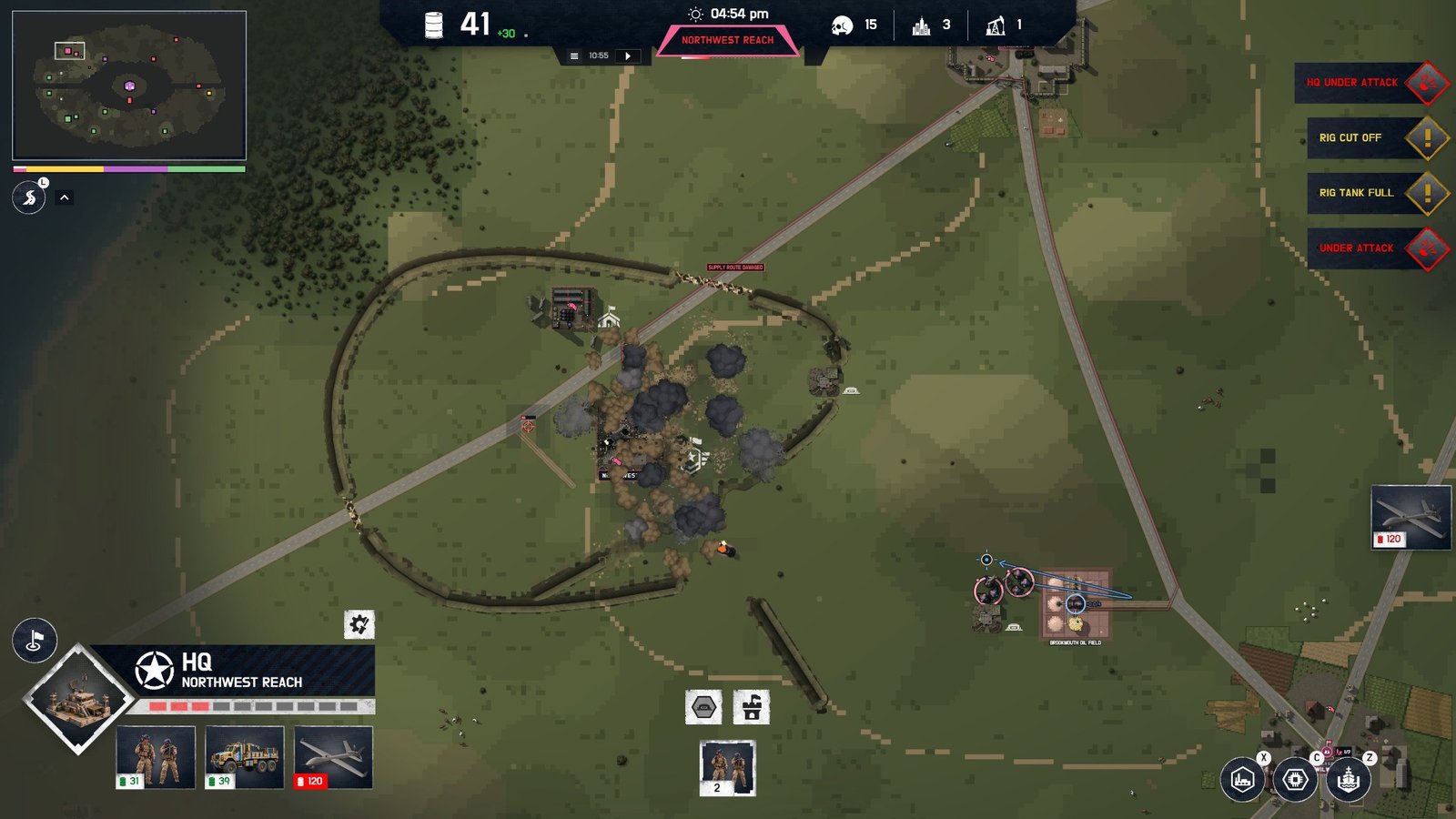
The trench in the picture above looks like a toddler’s attempt at a lasso. I can explain. I was trying to put a protective ring around my town, the way a sensible commander might, and the controls and I disagreed about where the line should go. The game sided with the controls. By the time I had finished, the town had its ring, a wobbly one, and my soldiers were sealed inside it like ships in bottles. The enemy had no such problem.
In my defence, I was learning several things at once. In the game’s defence, my AI ally was learning them a great deal faster. While I had been landscaping, it had seized an oil field and moved into a nearby town. I was still hunting for the barracks button when the enemy tanks rolled in, plainly unwilling to wait for the ribbon-cutting.
So, an apology to the hardcore grognards. Sorry to disappoint you, but this is not one of those traditional hex games where you can sit back, consult the tables and think things through. There is no time to think. By the time you have finished thinking, the tanks are already outside your base. WarFront, from Shu’la Lab LLC and due on 29 January 2027, is a real-time strategy game in the old tradition, closer to Red Alert, or more recently Tempest Rising, than to anything with an order of battle. The full release promises a seven-level campaign called The Long Road Home. The demo offers bot matches and a generous supply of rope.
My ally was conquering towns. I was still looking for the barracks button.
Arrival
The menu hints at a bigger game behind the curtain: a campaign, a sandbox, Workshop support, and a zombie-survival mode called Dead Front. Clicking that last one produced a bloodied Statue of Liberty and nothing more. The statue looked unwell. The zombies, if there are any, kept to themselves.
I picked the Coalition and asked for an AI teammate, which is how I approach every unfamiliar RTS. It seems only responsible that someone on the team should know what they are doing.
The map previews made the wargamer in me wince a little. Several were almost perfectly symmetrical: two shores facing each other across the water, an island in the middle, everything as neatly arranged as a football pitch. These are maps drawn so that nobody can complain about where they started.
Once the match begins, though, the game wins you back. The view is straight down, over pixel-edged forests, villages and the roads that join them, and it all sits together as though people actually lived there. Zoom out far enough and it looks like a map spread across a staff officer’s table.
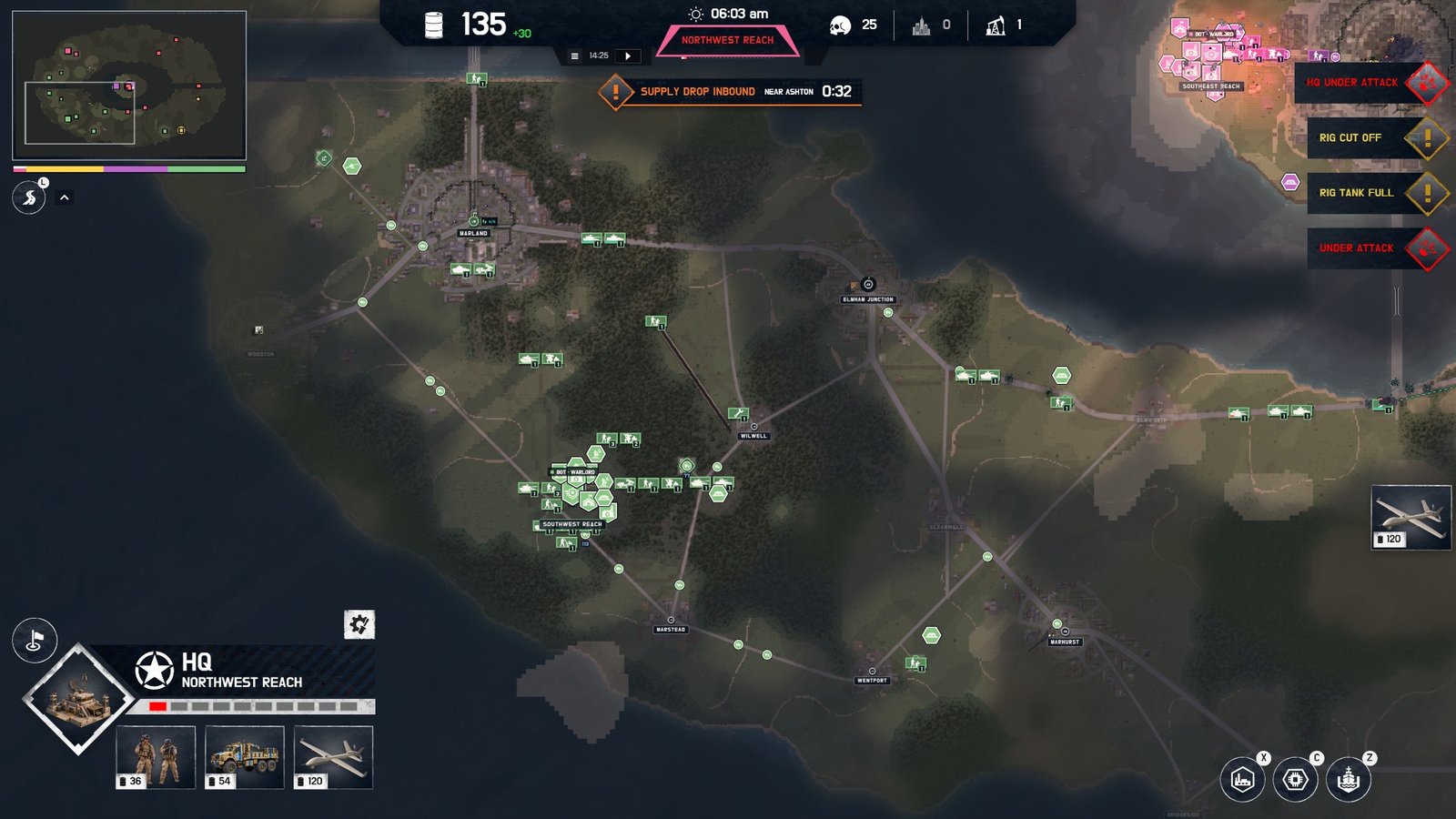
My troops arrived by air, a little like the opening drop in PUBG, except that I had no say in where we landed. One game put my headquarters on a junction of three roads. The next put it somewhere else entirely. I never discovered how the game makes up its mind.
Following the oil
Everything runs on oil. A truck trundles between a nearby field and your base, and every new unit is paid for in barrels from a counter at the top of the screen. Once you have watched that little truck make the trip a few times, you stop seeing the roads as decoration. They are the arteries of the whole operation.
My ally understood this immediately. It claimed oil fields, occupied a settlement and generally behaved like someone who had read the job description. I was still working out how to recruit the men who might occupy something.
Engineers can sabotage roads and, later on, repair them, and it doesn’t take long to see the possibilities. Cut the right road and the enemy’s oil stops arriving. There was an oil gusher on the central island that I coveted for most of one match. Unfortunately, the bridge to it was broken, and coveting was as far as I got.
The trench
Which brings us back to that trench. WarFront lets you draw trenches freehand, sketching the line across the ground instead of dropping pre-built sections into place. It is a wonderful idea, and in steadier hands it would look wonderful too. Where a trench crosses a road, it seems to form a gate or barricade. Mine, fumbled into place around the edge of town, simply shut the door. My men stood behind it with nowhere to go, and in the end I filled it in and started again.
Towns seem to change hands when your troops get close enough, and garrisoning one appears to add barricades of its own. I worked all this out under fire, which is an effective way to learn and not one I would recommend.
After dark
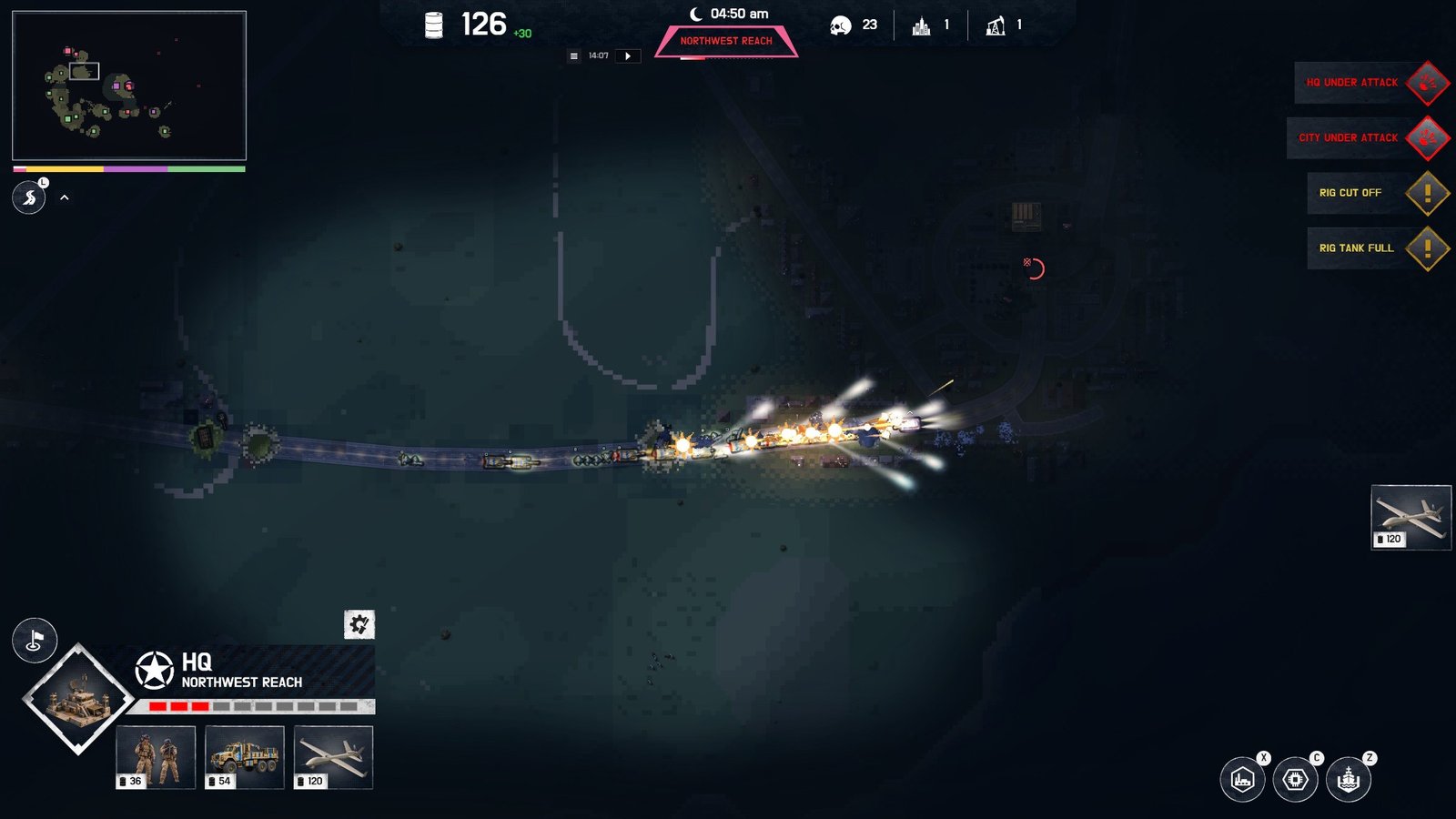
Then night fell, and WarFront showed me its best trick. The darkness is real. Outside the patches your units can see, the map practically disappears. A thunderstorm rolled in on top of it, and for a while I was commanding by the light of gunfire and explosions. It was gorgeous. My predicament, at least, was beautifully lit.
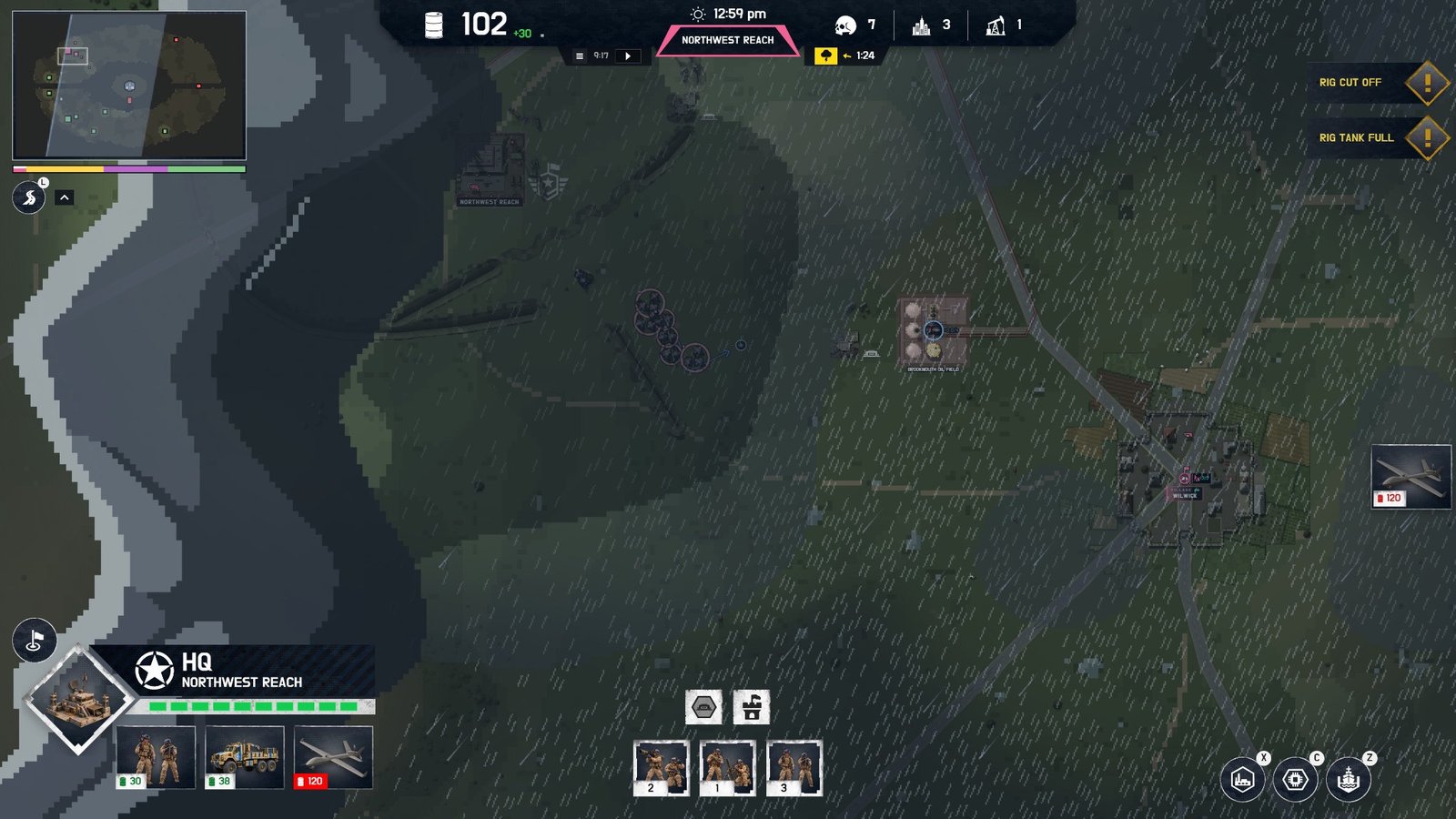
It was less gorgeous as a classroom. The mood worked on me completely. The controls I was still learning in daylight did not get any easier in the dark.
Where it trips
The controls were the real enemy. I kept right-clicking where the game wanted a left click, then overcorrecting the other way. The left-click orders are a throwback to older RTS games, and my fingers, trained on newer ones, refused to cooperate. Deselecting units became a small campaign of its own.
The construction controls, it turned out, had been sitting in the bottom-right corner the whole time. Once I found them, I built a barracks and an artillery range and started turning out mortar and anti-tank teams. The enemy, meanwhile, had not been idle.
Fighting took some adjusting to as well. My units chose their own targets, and when I clicked on a particular enemy, things did not go the way I expected. Mostly I concentrated on getting troops into the right place and letting them get on with it. I’d need more time to say how much control the game really gives you here.
Health bars appear only once something is taking damage. In my games, they appeared with admirable reliability.
The repair tool was harder to read. Its prompt invited me to click a damaged building or a cut road. The roads mended. My headquarters, by now looking rather sorry for itself, did not, and the game gave no clue why. Perhaps I missed something. If so, nothing on screen was willing to tell me.
And so the end came the way it usually does. Enemy armour arrived. I scrambled anti-tank teams towards it. The headquarters had lost a good chunk of its health, the oil was running dry, and I was still being introduced to the buttons. My second game ended much like my first. The AI ally deserved a better posting.
Final thoughts
So what is WarFront, on first impressions? A brisk, old-fashioned RTS with a few ideas of its own. The base building, unit production and pace put it firmly alongside Red Alert and Tempest Rising rather than the wargames I usually cover. What sets it apart is the view from above and the attention it pays to roads, supply and the ground you dig into.
I liked the art. I liked the weather even more, along with the thought that a well-placed saboteur might starve an entire army of oil. Freehand trenches are the kind of idea I hope other games borrow, ideally with a steadier hand on the controls than mine.
What it needs most is a proper welcome. I found no tutorial for these demo matches, and I needed one badly. Selecting, building, crossing trenches and making repairs all deserve some explanation, and when an order fails, I want to know why, preferably while my headquarters is still standing.
Until then, I can offer my own method: learning by repeated defeat. It works, eventually. The men inside my trench would probably prefer another instructor.
New to the hobby? The Start Here page and computer wargaming guide introduce the different approaches. For a smaller battlefield, the Firefight Commander’s Diary follows another difficult afternoon in command.
The VerdictFirst look
You enjoy real-time base building and want to experiment with oil routes, road sabotage and freeform trenches.
You need a clear tutorial before learning under fire, or prefer the pace of a traditional wargame.
Try the demo before considering the full game. The oil traffic, trenches and changing weather caught my interest, but the controls and explanations need a clearer first hour. These are early demo impressions, not a verdict on the full release.
Over to you
Have you tried the WarFront demo, and how did you get on with its controls and first hour?

Max Chee considers himself an avid wargamer, which inspired him to create this site. He has a burning passion for history and advocates computer wargaming for the masses. He believes one can derive knowledge from learning and playing out history,